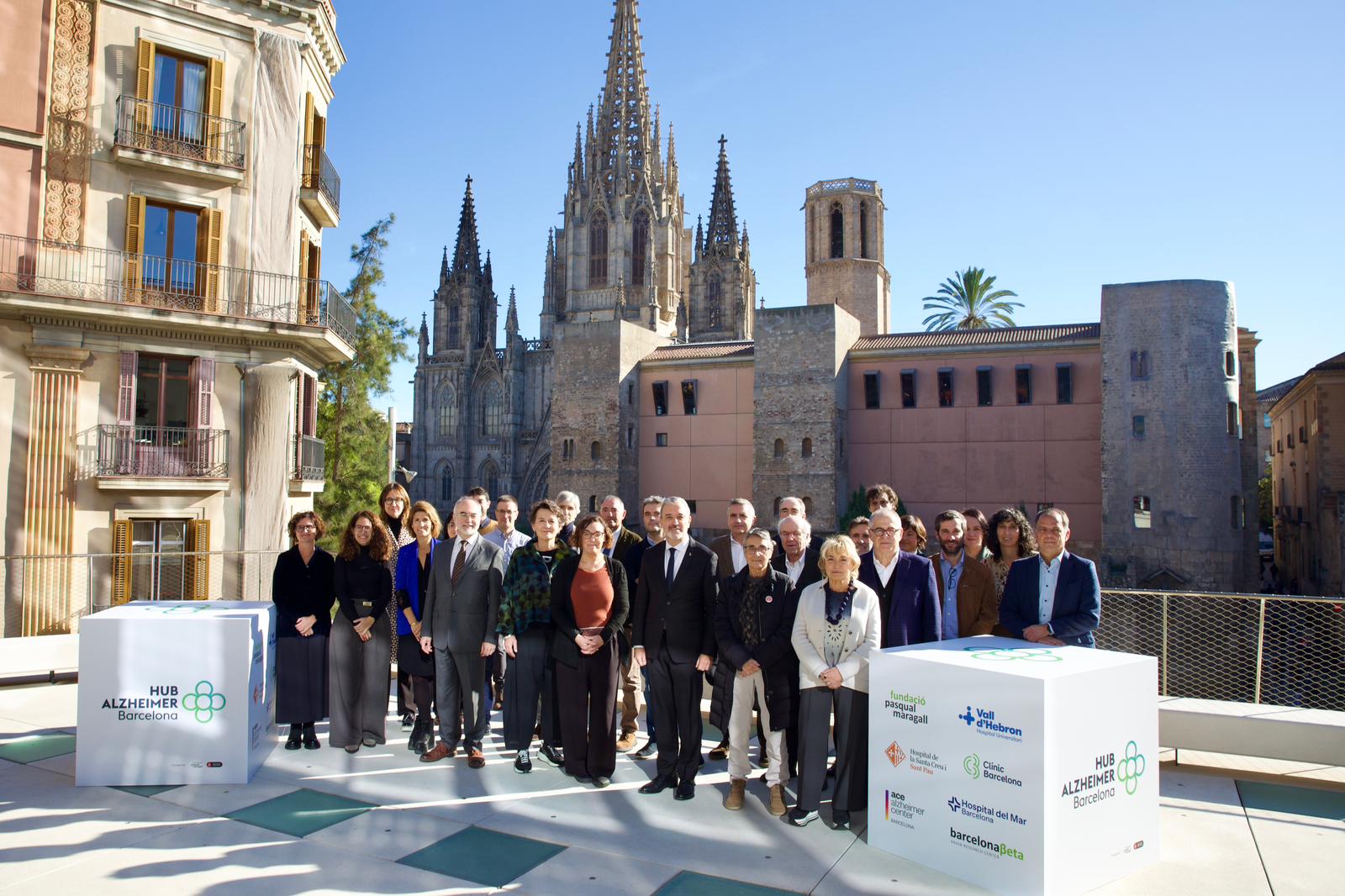
The 2nd Conference on Biological Therapies for Alzheimer's, organised by HUB Alzheimer Barcelona on June 19, 2025 at CosmoCaixa, brought together more than 200 people —healthcare, social and scientific professionals, partners, and participants in our studies—with the aim of discussing the challenges and opportunities posed by the implementation of new disease-modifying drugs for Alzheimer's in Catalonia.
The day was structured into six thematic sessions, in a panel discussion format, which can be accessed in full at the following link:
👉 https://www.youtube.com/playlist?list=PLoVIdcGT_hJtTBjVDZEj1TYNy-hXBwaID
We share the main conclusions from each session:
Session 1 – Introduction of Pharmacological Innovation in Europe, Spain, and Catalonia
The Ana Clopés, Director of the Medicines Department of the Catalan Health Service, opened the session with a comprehensive overview of the introduction of pharmacological innovation in Europe and its implementation in Spain and Catalonia, focusing particularly on biological therapies for Alzheimer's. She explained that, although the authorisation of new drugs is carried out through the European Medicines Agency (EMA), their incorporation into the public health system depends on each state, which assesses the cost-effectiveness ratio, budgetary impact, and actual application in the region. The process includes several phases: clinical trials, authorisation, financing, therapeutic positioning, and post-marketing monitoring.
Regarding the Spanish state and the specific case of Catalonia, he emphasised the importance of its own organisational model, which focuses on efficiency, safety, equity, and sustainability, placing patient needs at the center.
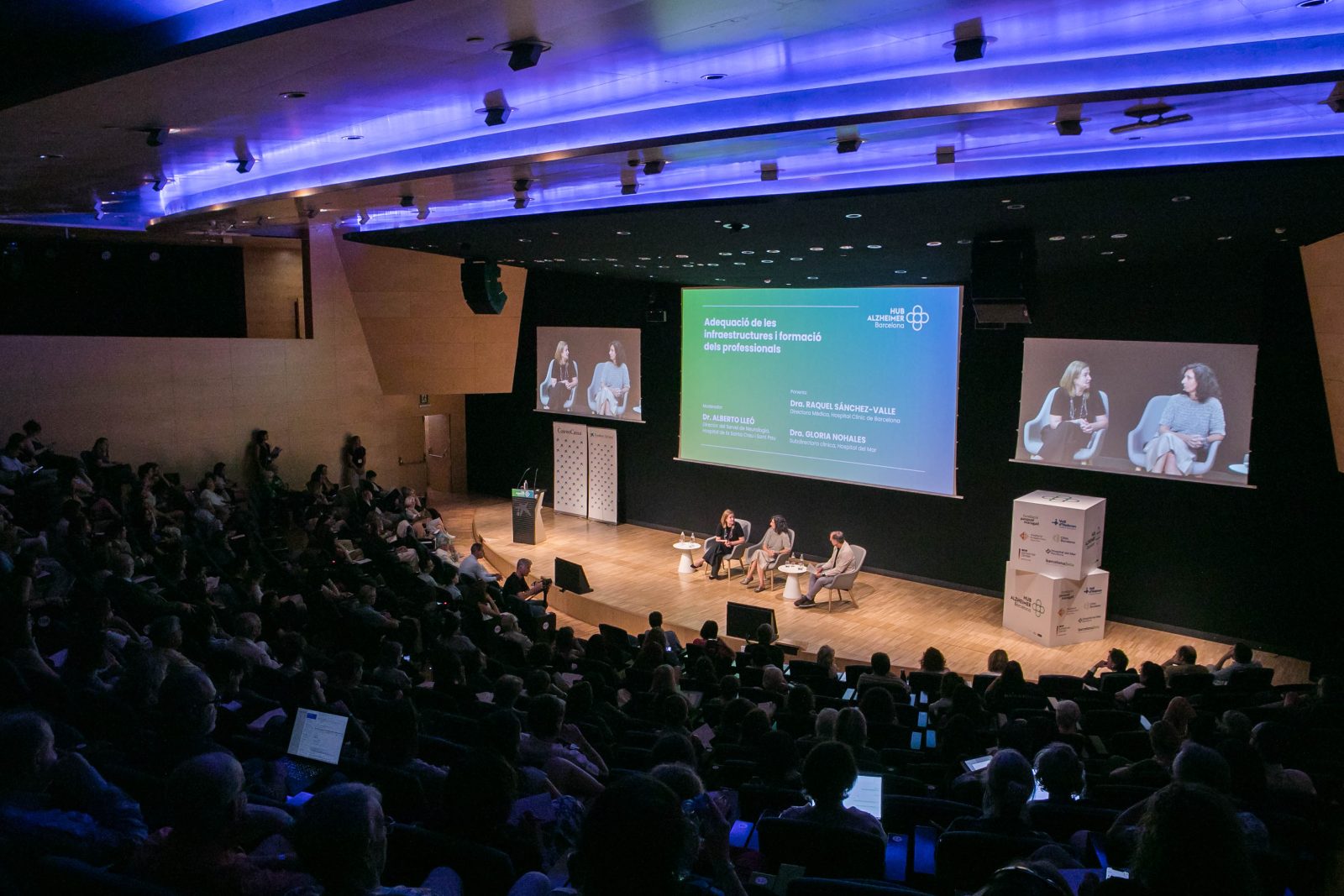
Session 2 – Infrastructure Adaptation and Professional Training
The session, moderated by Dr Alberto Lleó, The director of the Neurology Department at Sant Pau Hospital addressed the organizational and training challenges posed by the introduction of new disease-modifying drugs for Alzheimer's disease, such as lecanemab. Raquel Sánchez-Valle, Medical Director of the Hospital Clínic of Barcelona, and the Dr. Glòria Nohales, Deputy Clinical Director of Hospital del Mar, agreed that these treatments represent a paradigm shift in healthcare, with much more intensive clinical monitoring that requires a rethinking of infrastructure, circuits, and human resources.
They warned that many centers might not be prepared to handle the demand and emphasised the need to ensure territorial equity and establish shared circuits between hospitals with different diagnostic capacities.
The importance of coordinated and strategic healthcare planning, inspired by models such as the stroke code, and the training of specialised professionals was also highlighted.
Session 3 – Inclusion Criteria and Clinical Requirements for Treatment Prescription
Moderated by Dr Mercè Boada (Ace Alzheimer Center Barcelona), and with the participation of doctors Juan Fortea (Sant Pau Hospital), Albert Lladó (Hospital Clínic of Barcelona) and Marc Suárez-Calvet (Barcelonaβeta Brain Research Center), experts discussed clinical criteria to ensure appropriate, equitable, and efficient prescription of new biological treatments for Alzheimer's.
The need for a prior biological diagnosis and a streamlined referral system with the participation of primary care was highlighted.
There was also evidence of widespread ignorance about these treatments, which requires a clear communication strategy and ongoing training for professionals.
Finally, possible developments in therapeutic regimens and the importance of exploring new lines of research were discussed.
Session 4 – Clinical Monitoring and Side Effects Follow-up
Moderated by Dr Isabel Estragués, A neurologist from Hospital del Mar led this session, which addressed the clinical monitoring of Alzheimer's patients treated with biological therapies. Xavier Montalban, The director of the Multiple Sclerosis Center of Catalonia (CEMCAT) at Vall d'Hebron Hospital shared his experience in multiple sclerosis as a benchmark for the development of new treatments for Alzheimer's disease, emphasizing the importance of early diagnosis, continuous monitoring, and the value of specialized units. Juan Pablo Tartari, Head of Clinical Trials with Biological Therapies at Ace Alzheimer Center Barcelona, provided data on the use of lecanemab, emphasising that current discontinuation criteria are based on safety and should be adapted based on clinical experience.
The importance of detecting biomarkers of efficacy and monitoring potential long-term effects was emphasized. Both speakers agreed that the success of these treatments will depend on robust implementation in memory units, with adequate initial investment and preparation.
Session 5 – Patient and Family Perspectives in the New Therapeutic Era
Moderated by the director of the Foundation's Social Area, Laia Ortiz, this session included interventions by Aurora Santín (Alzheimer Catalonia Foundation), Inmaculada Fernández-Verde (AFAB and Vice president of FAFAC) and Monica Duaigües (Catalunya La Pedrera Foundation), who shared the expectations and concerns of people with Alzheimer's and their families regarding new treatments.
The speakers highlighted the key role of social organisations as essential agents in this new model of care, calling for clear, empathetic, and honest communication, as well as rigorous information on the efficacy, accessibility, and limitations of new drugs.
They also focused on current territorial inequalities and the need for emotional support and social assistance.
They called for better coordination between the social and healthcare sectors, streamlined referral channels, and comprehensive care that goes beyond drug treatment. They also warned that shortcomings such as a lack of professionals or insufficient specific training could hinder the effective implementation of new therapies if not addressed urgently.
Finally, they highlighted the long-standing work of social entities in prevention and screening, and demanded recognition as active players within the system.
Session 6 –Impact on Healthcare Services: Challenges and Adaptation
The day concluded with a round table moderated by Dr Pilar Delgado, Head of the Neurodegenerative Diseases section at the Vall d'Hebron University Hospital, and with the participation of Dr Joan Deniel Rosanas, family doctor and representative of CAMFiC, and the Dr Pablo Villoslada, Head of the Neurology at Hospital del Mar.
In this session, experts analysed the impact of new Alzheimer's treatments on the healthcare system, emphasising the need for equitable, accessible, and sustainable implementation. They highlighted the importance of early diagnosis in primary care, the urgent need to strengthen the training of healthcare professionals, promote coordination between levels of care, and combat the idea that cognitive decline is a natural consequence of aging.
They also emphasised the need to educate the public about often underestimated risk factors, such as insomnia and hearing loss.
Regarding the economic impact, they argued that new drugs should be considered as a social investment, as they could delay disease progression and reduce family burden.
Finally, they noted that implementation will be gradual and uneven depending on the region, which requires adapting care pathways and properly managing patient expectations.
This The meeting reaffirms the commitment of HUB Alzheimer Barcelona to network with institutions, professionals and social entities specializing in Alzheimer's research., to transform the care model and move towards a future where scientific advances translate into real improvements in the quality of life of people affected by Alzheimer's and their families.